The Usefulness of a Bee Hotel
While some install small bee nests in their garden purely for aesthetics, others do so for crucial reasons: crop pollination, combating bee decline, and more. Opinions diverge regarding bee hotels. The question arises: are they truly useful or not?
What is a Bee Hotel?
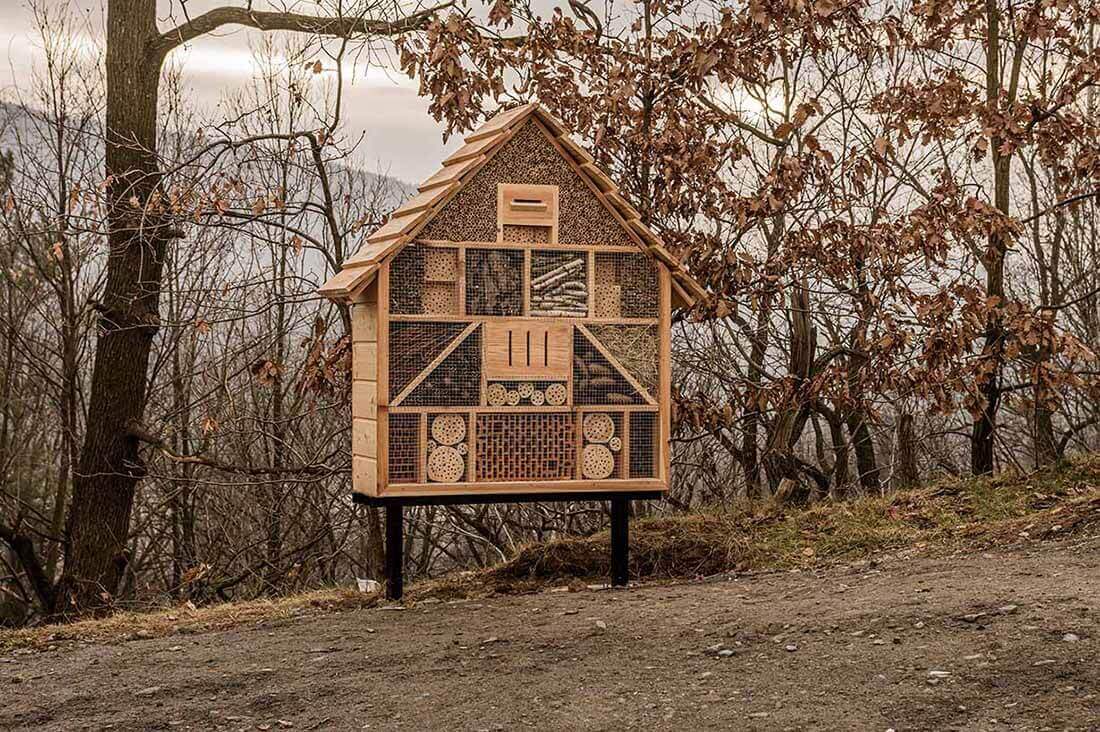
Also known as insect shelters, bee hotels are specially designed houses for these pollinating insects to take refuge when needed. A bee hotel can be easily installed in a small garden or a large vegetable patch. These are generally dedicated shelters for solitary bees, wasps, and wild bumblebees. And yes, while we tend to think that wild pollinators always work in colonies, this is not necessarily the case. Many bee species move alone, do not produce honey, but remain vital for the environment.
Why Build a Bee Hotel?
As you've understood, a bee hotel is primarily designed to host wild bees. They will only be seasonal tenants in these man-made shelters. Having no queen or workers, they are masters of their own tasks. And they love to forage in our gardens. To invite them and make them feel comfortable, there's nothing better than offering them a worthy shelter.
A bee hotel can serve as a refuge for these species at the mercy of nature, but they can also lay their larvae there. Building an insect hotel therefore greatly contributes to their preservation, while protecting them from predators like the Asian hornet.
For your information, nearly 80% of flowering plant pollination is carried out by solitary bees, while domestic bees account for only 15% of their share. So, even if it's not a honey bee, the wild bee undertakes a heavy task for the proper functioning of this planet's ecosystem.
Unfortunately, these pollinating insects are endangered species, already due to their lack of shelter. Thus, by building a suitable bee house for them, you will contribute to their survival.
It is clear that the natural shelters of wild bees are fragile and are experiencing increasing destruction by humans and nature. These insects therefore have fewer and fewer places to take refuge in winter, leading to their decline. Building a bee hotel at home thus proves to be of great utility.
Different Types of Bee Hotels
To welcome solitary bees and invite them to your home, have you decided to create bee hotels? This is truly an excellent alternative. Both you and the bees could greatly benefit from it.
Building a bee hotel at home is not complex. You simply need to find a suitable spot in your gardening area. Furthermore, there are different types of bee hotels:
The Wooden Log Bee Hotel
This is a small house for wild bees built from a wooden log. You will generally have a choice between birch, oak, and beech. Easy to make, start by cutting about 15 cm (6 inches) of wood length with a 20 cm (8 inches) diameter. Then create several small holes inside, 5 to 10 mm (0.2-0.4 inches) in diameter, spaced about 2 cm (0.8 inches) apart. Be careful, the holes should not completely penetrate the log.
Now that you have your bee hotel, place it at a height of about 30 cm (12 inches) from the ground, well exposed to the sun. You will find that pollinating bees will appreciate this natural shelter you have built exclusively for them.
The Hollow Stem Bee Hotel
This is also a natural bee hotel, made from plant stems that have a hollow cavity inside. Examples include bamboo or reed stems.
To build your solitary bee hotel, cut several pieces of stems 15 cm (6 inches) long. Then fasten them together. And that's it! The bee house is ready. You just need to find a good place to put it. With this method, you can make several shelters for the happiness of pollinators.
The Clay Bee Hotels
Easy to make with readily available raw material like earth, this type of bee hotel is suitable for mason bees. It only requires a few wooden planks, loamy soil, and some pieces of wood of different diameters. For the roof, use a large wooden plank well covered with bituminous paper. This bee hotel offers a safe shelter for solitary bees and contributes to the better development of their larvae in summer. Be careful, however, this type of bee niche should not be used in winter, or at least, must be placed on a raised surface during that period if larvae are still present.
Where to Get Ready-Made Bee Hotels?
Overwhelmed by work and the daily pace of life, yet you also want to contribute to environmental well-being by installing bee hotels at home? Don't panic! Today, there are various models of shelters specifically designed for these eco-friendly insects available for sale.
As practical as they are aesthetic, bee chalets come in various designs. Indeed, designers have created very trendy models that will perfectly adorn your garden while fulfilling their role in biodiversity.
Online or in pet stores and various beekeeping shops, these cute bee houses are available. Find models that adapt to small, medium, and large spaces. No need to rack your brains searching for dead wood, stumps, or branches to create your bee hotel; professional artisans have already done it for you!
And again, the choice is yours:
Niches with or without observation drawer: If you want to closely follow the daily life of wild bees, the option with an observation drawer is for you.
Niches of different sizes with or without a roof: Of course, the size of the niche will depend on the space you have available. Then, for better interior protection, especially if the structure is placed on a bare surface, it is preferable to have a roof.
Niches in natural wood, plywood, metal, etc.: Niches are built from various ecological materials. You even have recyclable cardboard niches, which are very easy to move, remove, and reinstall as you wish.
4-star hotels: With this option, offer a luxury shelter to the bee. These types of bee hotels can be composed of different structures built from various materials. Etc.
Now, all you have to do is choose from all these possibilities available to you!
What is the Best Time to Install a Bee Hotel?
Even if you can install a bee hotel at home at any time of the year, for the purpose of adding more aesthetics to your garden, there is indeed a better period when you will have a higher chance of welcoming a large number of guests.
Therefore, to install a bee hotel at home, it would be best to do so from late February to early March. It is during this period that various species of wild bees begin their nesting. They will then tend to seek safe shelter for their larvae. This way, you won't risk missing them.
Tips for Attracting Pollinating Insects to Your Bee Hotel
In some cases, even if you have installed a beautiful shelter for pollinating insects in your garden, they don't even come. If this happens to you, know that it's not by chance.
Here are some tips for attracting a good number of bees to the bee hotel you have created:
You must place your bee hotel in a green space, where there are flowers and plants nearby. There's no point in installing a bee hotel in a large, deserted yard. The bee won't be interested in coming since it will have nothing to do. You will therefore be encouraged to garden and plant flowers in the vicinity.
Ensure you set up a versatile bee hotel, capable of accommodating insects of all sizes. This artificial insect shelter must make them feel comfortable enough. And if the space turns out to be too narrow for them, preventing them from entering with ease, they will quickly risk abandoning the site.
Do not use pesticides and insecticides. These products risk scaring away bees, or worse, killing them!