How to Install a Bee House at Home?
Bees are crucial for the pollination of flowering plants. They contribute to successful harvests, and certain species, especially solitary bees, are excellent helpers for gardeners. Despite their importance, these insects are increasingly seeing their natural habitats threatened and diminishing. It is essential to contribute to their preservation for the sustainability of their species. Are you eager to help bees? Unsure how to install your bee house? If so, here's a guide to assist you.
Choosing the Right Type of Bee House to Install
There are many types of bee houses. However, the materials and components of the nest vary according to the habits of each bee type. You can purchase your insect house from specialized stores.
Alternatively, you can build one yourself, considering the type of bees you wish to host. For example, you can choose an old wood bee hotel, a ground-nesting bee house, or one made of hollow stems.
Old Wood Bee Houses
Most bees prefer to shelter in galleries dug into dead wood. You can replicate this bee shelter at home with an old wood bee house. To do this, you'll need pieces of wood at least 15 cm thick. Ensure your piece of wood is free of gaps and cracks.
Next, using a pointed object, drill holes of various sizes and depths into the wood, spaced about 2 cm apart. The hole diameters can range from 3 to 10 mm. Finally, one end of each gallery must be closed, and the gallery walls should be smooth.
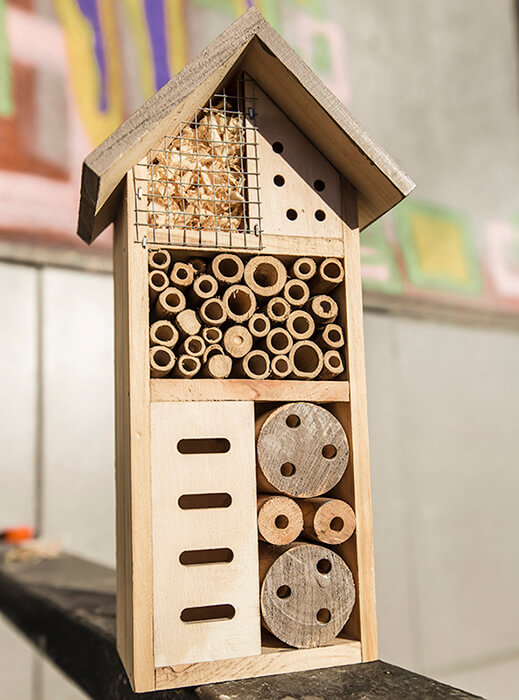
Hollow Stem Bee Houses
Instead of a wooden bee house, you can use hollow and soft stems to make the bee house. Prefer bamboo, reed, or raspberry stems 2 to 10 mm in diameter. They are ideal and highly favored by bees, especially solitary ones.
Once the stems are collected, cut them into various sizes, specifically 10 to 20 cm sections, using an appropriate tool. One option is to gather them and tie them into bundles, sealing one end. The assembly can then be hung on a stake.
Another option is to group all the cut stems into a wooden niche, a tin can, or a gutter pipe. It is essential to seal one end of the stems. You can use a mixture of sand and clay to do this.
When it comes to hollow bamboo stems, it's even simpler. You just need to cut the complete stem after a node. Finally, ensure the stems are tightly packed together.
Ground-Nesting Bee Hotels
While some bees like to shelter in galleries dug into dead wood, others prefer to settle in the ground or in clay walls. Thus, you can make a ground-nesting bee house or one with clay walls. To achieve this, you'll need a clay pot or a terracotta planter.
If you choose a ground nest, make sure to leave a hole at the bottom of the pot and fill it to the brim with sand (silt or clayey sand). Then, place stones, spacing them out to secure the sand in the pot.
Where to Install Your Bee House at Home?
Once the bee hotel is chosen and built, the next and final step to welcome bees is installing this nesting aid. The location of the shelter determines its acceptance by the insects. To do this, the installation must consider many criteria.
Installation Period
It's not always easy to know when bees are passing through your property or garden, or when they are looking for a place to shelter. However, the bee nesting period begins in spring, as early as the third week of March for some species.
The perfect time to install your bee house in anticipation of welcoming bees is between late February or early March. This way, if some species start nesting earlier, you won't miss them. If you delay installing your bee houses, for example, late after the start of spring, bees will be scarce in the shelters you've prepared for them.
Bee House Height
Ants are generally attracted to pollen remnants left by bees in front of their shelters. When the bee house is placed on the ground, bees are more exposed to their nest being invaded by ants seeking pollen remains.
Furthermore, when your bee house is placed too low or directly on the ground, bees can be disturbed by small children or pets roaming around their location. Therefore, it is advisable to place your bee house between 1.5 and 3 meters from the ground or simply on a first-floor windowsill.
Location for the Bee Nest
It is preferable to install the bee house in your garden or near a bed of nectar-rich flowers. If there aren't enough blooms in your garden, consider cultivating flowering plants near the bee house and spreading the bloom throughout the year. This way, the insects will always have food.
Positioning the Bee Hotel
It is advisable to orient the bee house towards the south or southwest. This way, it will have its back to the prevailing winds and face the rising sun. Bees generally like to bask in the morning sun. However, avoid placing the bee house entirely in the shade, entirely in direct sun, or exposing it to extreme rain and wind.
In general, for installing your bee house at home, remember to choose a location conducive to their well-being and sheltered from dangers such as ants, scorching sun, humidity, and deep shade. Furthermore, prioritize early March for setting up the bee house. This way, you can welcome many bees into your nest and help sustain these insects.