Identifying Wild Bee Nests & Hives
Did you know that the world of bees counts hundreds of millions of individuals on this planet? They play a significant role in the proper functioning of the ecosystem. However, you should also know that there are different types of bees, which can be classified into two categories: domestic bees and wild bees. Both play an important part in biodiversity, the reproduction of fruit trees, and flowers of all kinds. But here's the thing: if domestic bees are the main producers of honey, what do wild bees do, how do you recognize them, and how do their nests form?
The Different Species of Wild Bees
Different species of wild bees can be distinguished. They do not all emerge in fields or forests simultaneously. They have assigned themselves rotational appearances, depending on the current season:
• The Mason Bee (Osmia)
The Mason bee (Osmia) is the species that initiates the appearance of wild pollinators. It emerges in spring and creates its nest inside wood. If you wish to see Mason bees, you only need to drill a few holes 7 to 8 mm in diameter into wood. You will immediately recognize a male by the tuft of white hair on its head!
• The Ivy Bee (Colletes hederae)
This is a species of wild bee that emerges in autumn. The Ivy bee (Colletes hederae) is the species that concludes the wild bee appearance season during the year. It is a bee that creates its nest underground. If you are walking in a field and encounter bees emerging from the ground, there is a strong chance it is an Ivy bee.
• The Leafcutter Bee (Megachile)
This species of wild bee is primarily encountered in July. It is characterized by its habit of cutting leaves. It is a very particular species that creates the walls of its nest with pieces of leaves collected using its mandibles. You can easily attract leafcutter bees to your home by installing a bee house.
Besides these three species, there are many other wild bee species such as the Hylaeus (Yellow-faced bee), the Cuckoo bee, and more. In total, there are between 800 and 1000 species of bees that live apart from large colonies, choosing to lead a solitary life by building their own nests in nature.
Distinguishing Wild Bees from Domestic Bees
Differentiating between wild bees and domestic bees can be complicated at first. However, the more you learn about them, the better you will be able to distinguish them.
Firstly, you should know that domestic bees and wild bees should not be housed together. Be aware that nearly 90% of wild bees do not have a queen. They live solitary lives, which does not prevent their integration into swarms, especially for males of certain species. Females are generally more independent and will not serve as workers for other groups. They ensure their own survival.
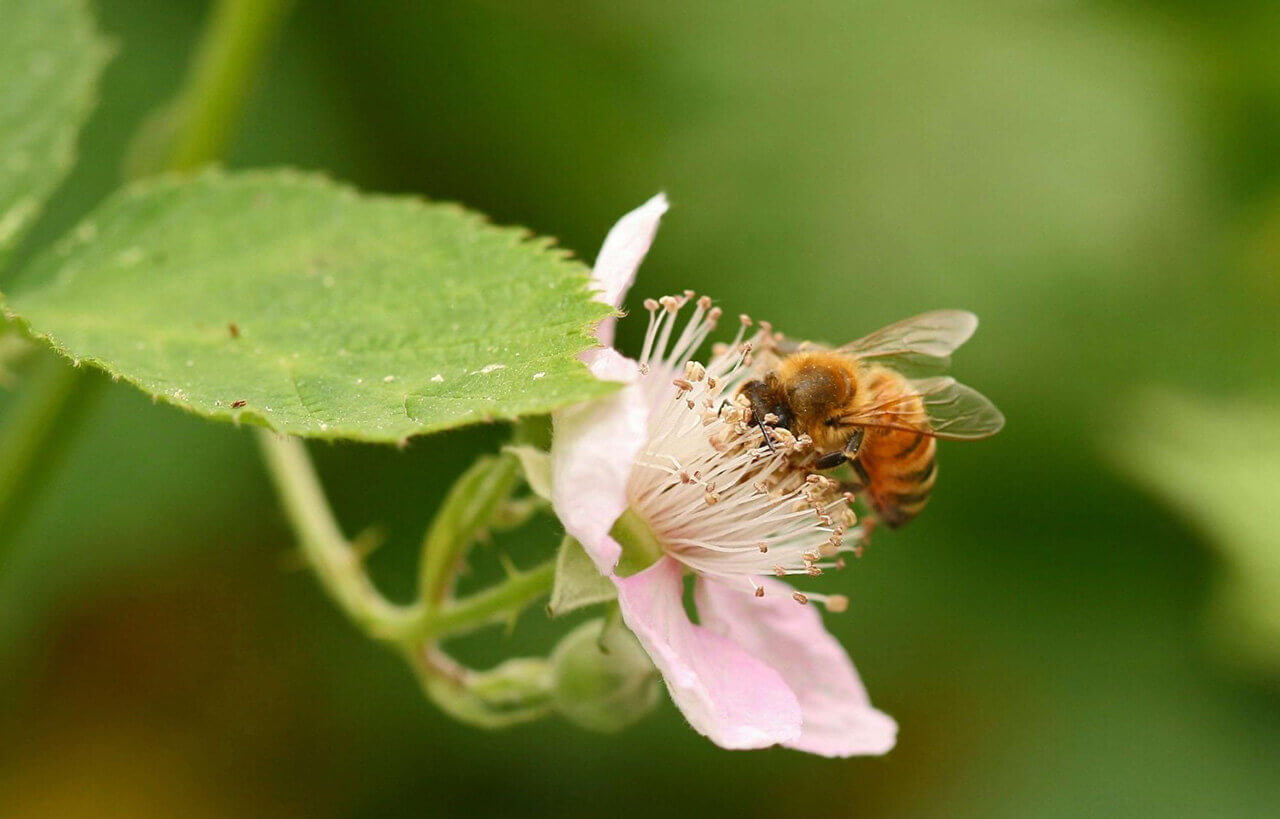
Unlike domestic bees, wild bees do not produce honey. They only forage for nectar and mix it with pollen to feed their young. These species generally do not have a sting and do not sting. They even tend to flee from humans.
Wild bees primarily serve as pollinating insects on this planet; they are the main contributors to the pollination of fruit trees and optimize harvests.
The Different Forms of Wild Bee Nests
Wild bee nests are very different from domestic bee hives. The latter often feature structures prefabricated by humans. Since wild bees do not produce honey, they are less demanding regarding the quality of the structure or storage security.
Wood, soil, leaves… all can serve as a niche for wild bees. Some wild nests can easily deteriorate due to adverse weather conditions. But the good news is that they can also rebuild very quickly. Among the different forms of wild bee nests, we can mention:
Basket Nests :
In tube or round shapes, these types of nests are generally found in forests in Spain, Africa, the Amazon, etc.
Wild Nests in Tree Trunks :
Many bees of various wild species love to build their nests in hollow tree trunks for the simple reason that they feel more secure there.
Underground Wild Nests :
A favorite spot for the Ivy bee, the soil also makes a perfect habitat for certain wild bee species.
Different Categories of Wild Bees Based on Their Nests
Based on the method they use to seal their nests, a significant number of wild bees can be further classified into different categories.
Mason Bees :
They are mostly observed in spring. This category of mason bee can be easily attracted. Mud is the material they use to seal their nests. Among this bee category, we can cite, for example, Osmia cornuta.
Leafcutter Bees :
This is a summer bee. It designs its nest with a concern for good resistance to winter cold by choosing thick leaves. This is the case, for example, with rose leaves. Megachile rotundata is among these types of bees.
Carpenter Bees :
This category of bee is also called a wood-borer. They tend to create their nests in dead wood trunks by installing tunnels nearly 30cm deep.
Wool Carder Bees :
Bee species such as Anthidium manicatum are classified as wool carder bees. They tend to build their nests with plant fibers. They are found most particularly near fields.
Resin Bees :
This category of wild bee owes its name to its use of fir resin for constructing its nest tunnel. This insect combines it with small pebbles to achieve a perfectly robust structure to protect it from predators.