Beeswax: The Ultimate Guide
A natural substance produced by bees, beeswax, like honey, is a product of the hive. Known and utilized for centuries, beeswax is a concentrate of powerful active ingredients brimming with multiple benefits. Its use is becoming increasingly common in both cosmetics and phytosanitary applications. What is beeswax? How can you best use and harness its power? In this article, discover everything about this multifaceted marvel of the hive.
What is Beeswax?
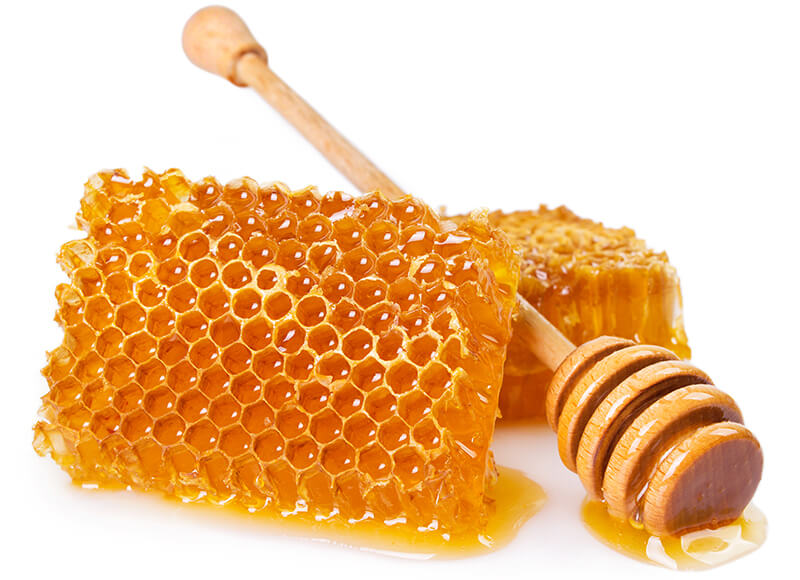
Scientifically known as Cera Alba, beeswax is a substance secreted by bees to ensure proper honey storage. It originates from worker bees, who produce it through wax glands located under their abdomen. Beeswax is used to build the honeycomb cells that contain honey, pollen, and brood.
Forming the structure of bee swarms, wax appears in the form of honeycomb cells. Beekeepers collect it, separate it from honey, and remove impurities before marketing it in its raw form. To produce 1 kg of wax, bees must consume an average of 8 kg of honey.
However, with this quantity of wax, they can then build cells capable of holding up to 27 kg of honey. This explains the rarity of beeswax and its high cost. For commercialization, this wax is presented in various formats. It can be in the form of round, square, or rectangular blocks, pellets, flakes, thin wafers, or bars.
Regardless of its presentation format, the properties of beeswax do not change. However, depending on the intended use, some formats are easier to handle than others.
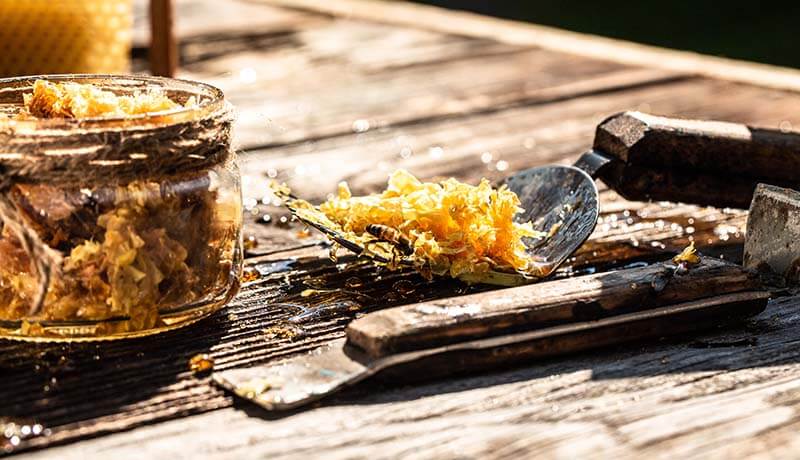
Beeswax Extraction Methods
Beekeepers use several methods for beeswax extraction.
The first method involves removing the wax as soon as the honeycomb cells inside the hive are full of honey. The beekeeper then extracts the honey through a centrifugation process, leaving the wax free of impurities. They then proceed to collect the beeswax blocks.
The second method involves designing beehives with frames specifically for bees. These frames are made solely for wax production. They have the advantage of facilitating the extraction of wax and honey without altering the hive's structure.
Thus, at the end of the season, beekeepers collect the frames while the bees remain inside the hive. Once the cells are removed, beekeepers must then extract the wax from the frame. To do this, they use solar extraction, steam extraction, or electric heating extraction.
Generally used by small-scale beekeepers, solar extraction is the most natural method. It involves removing the wax from the frames after prolonged exposure to the sun, where the heat makes it pliable. This is generally a lengthy process that requires time and significant availability.
However, solar extraction yields excellent quality wax that retains all its properties. In contrast, steam extraction involves heating the frames in a bath of boiling water. This method, particularly favored by professional beekeepers, is faster and less cumbersome to perform.
Steam extraction produces medium-quality wax. Finally, there is electric heating extraction, which is a purely industrial harvesting process. It does not require the removal of frames and involves applying intense heat within the hive. It has the advantage of preserving the hive and recycling its frames. However, the wax extracted by this method is of lower quality.
Characteristics of Beeswax
Beeswax is a complex mixture composed of over a hundred elements :
- 70 to 80% wax esters
- 12 to 16% hydrocarbons
- 14% fatty acids
- 1-5% propolis, pollen…
- 1-2% alcohol
- 1-2% water
A solid at room temperature, beeswax crumbles at low temperatures and melts from 60°C. It belongs to the lipid category and is therefore insoluble in water. The wax produces flammable vapors from 120°C and can ignite at 140°C.
Furthermore, there are two types of beeswax: white beeswax and yellow beeswax. The latter is a 100% natural product derived from the raw extraction of wax from the honeycomb cells. It undergoes no purifying or deodorizing treatments. Yellow beeswax typically contains remnants of propolis, pollen, or honey.
It is the best wax for preparing natural cosmetic and hair care products. White beeswax, on the other hand, is obtained through steam heating. It is hot-filtered and undergoes a series of bleaching, purifying, and antiperspirant treatments. White wax is used for making maintenance products, household items, and decorative articles.
Uses of Beeswax
Beeswax is a product with extraordinary therapeutic and phytosanitary properties. Decades old, it is a marvel of nature produced by bees. Just like the honey it protects, beeswax is endowed with multiple attributes. It therefore serves various uses.
For Health
It is a hive product brimming with therapeutic virtues. Used as a remedy for millennia, it is still employed to treat certain bodily ailments such as wounds, ulcers, and infections.
Beeswax is also used as an ingredient in balms for rheumatic diseases. It serves as a restorative cream to alleviate burns, inflammations, and even sprains.
For Skin
The therapeutic properties of beeswax are well-established. Firstly, it helps soften the epidermis and maintains good hydration. Additionally, it protects the skin against sun, wind, and cold. Therefore, it is used as an emollient in creams, lotions, and body balms.
Thanks to its soothing properties and the vitamin A it contains, beeswax is useful for repairing damaged skin. It also relieves chapped lips during cold periods. Thus, it is a healing product that cleanses and smooths the epidermis and mucous membranes.
Beeswax has the advantage of being suitable for both oily and dry skin. It is a universal product.
For Hair
Beeswax hydrates hair. It can be used as a mask, cream, or balm, combined with vegetable oils or not. It protects hair and gives it resistance to harsh seasons. It is particularly suitable for dry and frizzy hair, keeping it hydrated and shiny.
This wax also helps to cleanse the scalp to strengthen hair fibers and promote better hair growth. It also serves to strengthen eyelashes and thus protects the eyes from external aggressions. It is used as a component in the formulation of certain types of mascara.
For Maintenance
Beeswax is used for the maintenance of furniture and all wooden creations. It removes scratches or other stripping marks from furniture. To do this, simply heat the wax in linseed vegetable oil to melt it. Applied in circular motions once cooled, the resulting mixture seals and repairs damaged furniture.
It has the particularity of restoring shine and luster to furniture, regardless of its age.
Benefits of Beeswax
It is a treasure trove of essential natural virtues for the skin and body. With a high vitamin A content, it acts as an anti-aging product and brings oxygen to the epidermis. The wax also hydrates, protects, and softens the skin. As an anti-inflammatory substance, it effectively combats eczema, repairs damaged skin, and soothes redness and itching.
It has a healing and nourishing effect on the skin. It also has the particularity of protecting it against external aggressions. Suitable for all skin types, it forms a protective film, deeply hydrates, and does not clog pores.
Beyond its benefits for the skin, beeswax is also used for the maintenance of furniture and wooden materials. Just like the honey it houses, beeswax is one of the many wonders of the hive and a cocktail of virtues.
Contraindications and Precautions for Beeswax Use
Beeswax is considered a non-toxic and non-irritating substance for the human body. Despite all its practical uses and benefits, it can pose a danger to the human body. Indeed, the pollen and propolis it contains can be sources of allergies. Therefore, its use is not recommended for children under 3 years old.
Furthermore, beeswax cannot be used directly on the skin. It must necessarily be diluted with a vegetable oil to avoid clogging skin pores. As a precautionary measure, it is strongly recommended to ensure you are not allergic to bee products before using beeswax.