- In Europe, 1 wild bee species in 10 is threatened with extinction (IUCN Red List, 2025) and grassland butterflies have declined by 36% between 2010 and 2020.
- Citizen science schemes (FIT Counts, the Big Butterfly Count) let anyone help researchers, with no training required.
- Shop-bought "wildflower meadow" seed mixes can do more harm than good: letting the grass grow is usually better.
- To keep butterflies, you have to feed their caterpillars: a patch of nettles is worth its weight in gold.
- Around 70% of wild bees nest in the ground: a little bare, sunny soil helps them more than a bug hotel.
Why it's urgent: the decline in numbers across Europe
The assessments published in October 2025 by the International Union for Conservation of Nature (IUCN) leave little room for doubt: of the 1,928 wild bee species assessed in Europe, at least 172 are threatened with extinction — more than twice as many as in 2014. Among bumblebees, which are essential for pollinating tomatoes, peppers and soft fruit, more than one species in five is now threatened. Butterflies are faring no better: grassland butterfly populations fell by roughly 36% between 2010 and 2020, and over 40% of the continent's endemic species are threatened or near-threatened.
Yet nearly 90% of European flowering plants depend on animal pollination, as do around three quarters of the world's food crops. The European Commission estimates that some 5 billion euros of the EU's annual agricultural output is directly attributable to insect pollinators. That is precisely what the EU Nature Restoration Regulation (2024) and the revised EU Pollinators Initiative, "A New Deal for Pollinators", are trying to protect: recreating pockets of nature everywhere, where insects can find food and shelter.
One figure to bear in mind for what follows: solitary bees forage only a few hundred metres from their nest, and bumblebees around a kilometre. So every garden and every balcony counts, quite literally. Here are four ways to make yours a link in the chain.
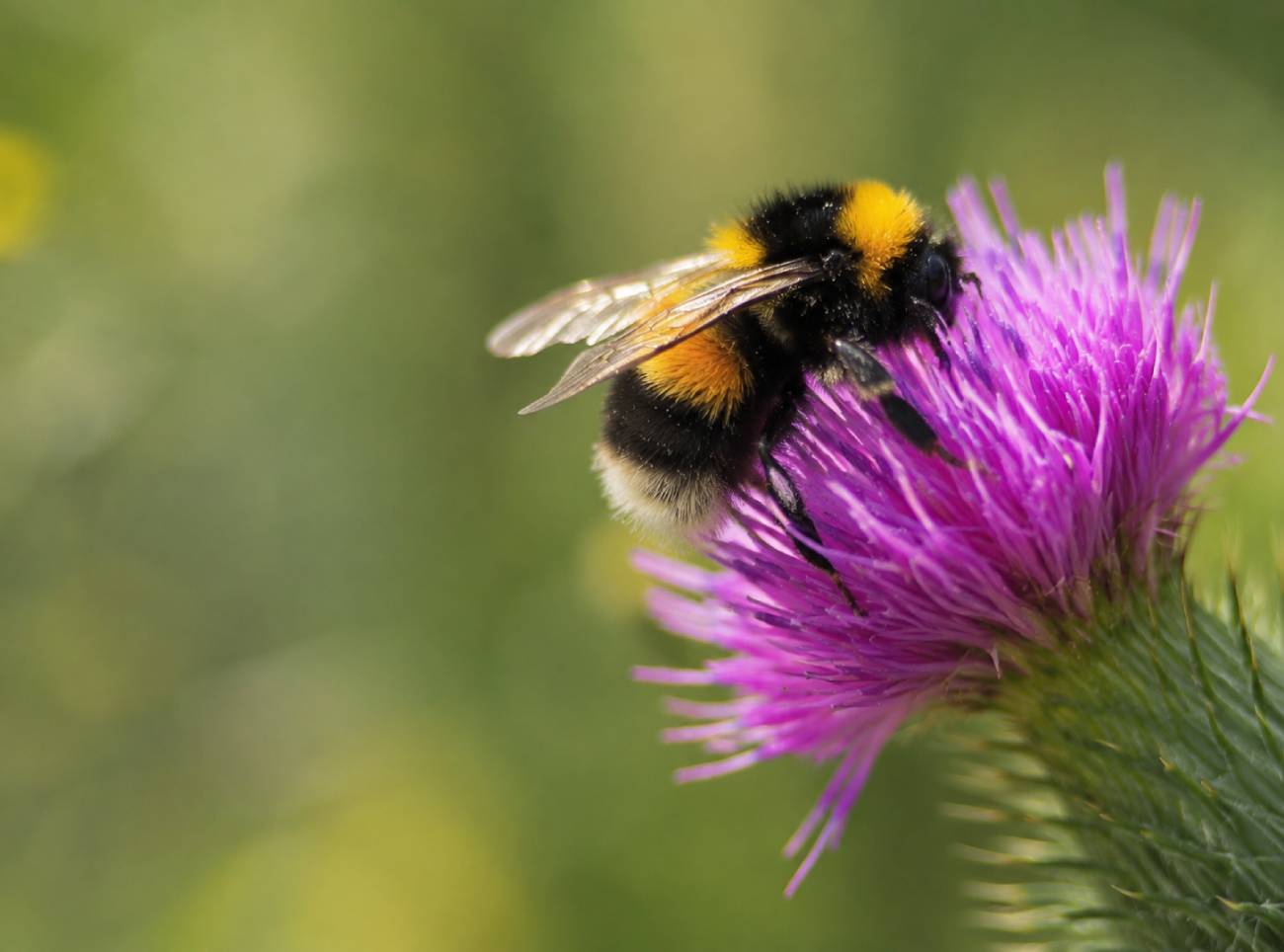
1. Become an observer: join a citizen science scheme
Scientists can't be everywhere. To track how populations are changing, they rely on thousands of volunteers — and you can join them this weekend, with no prior training whatsoever.
- FIT Counts (Flower-Insect Timed Counts), run by the UK Pollinator Monitoring Scheme: pick a patch of flowers, spend 10 minutes counting every insect that lands on it, and submit your count on ukpoms.org.uk or through the free FIT Count app. The method works just as well on a balcony geranium as in a large garden, and the same protocol is now used right across Europe.
- The Big Butterfly Count, organised by Butterfly Conservation: spend 15 minutes counting the butterflies you see in your garden, on your balcony or in a park, using a simple identification chart, and record what you find on bigbutterflycount.butterfly-conservation.org.
- Elsewhere in Europe, the eBMS network (European Butterfly Monitoring Scheme) coordinates equivalent surveys in more than twenty countries, from Germany to Spain and Italy. The principle — walking the same short route regularly and counting what you see — is the same everywhere. In France, the Spipoll scheme asks you to photograph, for 20 minutes, every insect visiting a flowering plant.
This citizen-collected data is anything but anecdotal: it is precisely what made the decline of pollinators measurable, and it now feeds both scientific publications and public policy.
2. Be wary of "wildflower meadow" seed packets
It sounds counter-intuitive, but seed mixes sold as "flowers for bees" can do more harm than good. Many contain ornamental or non-native species, sometimes invasive ones, which compete with the local flora that wild pollinators actually depend on.
Conservation charities recommend a far simpler approach, and one that is completely free: stop mowing part of your lawn!
If you let a corner of the garden grow freely, or cut it late (once or twice a year, at the end of summer), local wildflowers — clovers, dandelions, knapweeds, ox-eye daisies — come back on their own within a season or two. That is the whole idea behind No Mow May, the campaign run by the charity Plantlife. And if you really do want to sow, choose seed of certified local provenance: native-origin seed is now widely available, and in Germany, for instance, regional provenance seed ("Regiosaatgut") is a legal requirement in the wider countryside.
3. Plant for butterflies… and for their caterpillars
Think of your garden as a service station for butterflies passing through: what they need is plenty of nectar, in sunny spots sheltered from the wind. Among the reliable choices, easy to find anywhere in Europe: red and white clover, wild marjoram (oregano), lavender and thyme, knapweeds, devil's-bit scabious and field scabious.
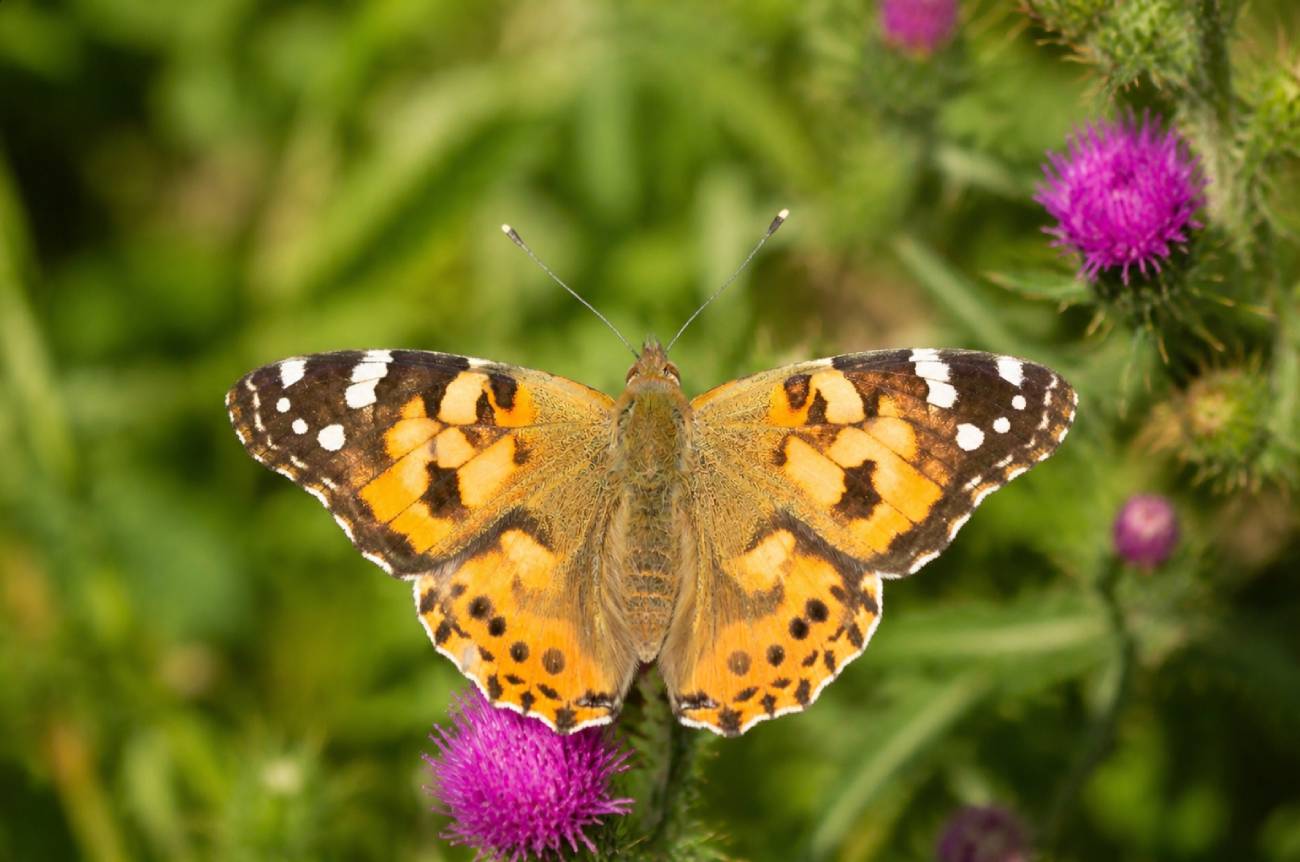
But if you want butterflies to stay and breed in your garden, you also have to feed their caterpillars — something almost everyone forgets. And the most valuable host plants are often the ones we pull up: the common nettle, essential to the peacock, small tortoiseshell and red admiral, but also bird's-foot trefoil, cuckooflower, or simply wild grasses. A sunny patch of nettles in a corner of the garden is one of the single most effective things you can do for butterflies.
4. Think beyond the bug hotel
The bug hotel has become the symbol of the wildlife-friendly garden, and it genuinely is useful. But it only meets the needs of a minority of species: only cavity-nesting bees, which nest in hollow stems or beetle burrows in wood — around 30% of wild bees — will move in.
Across Europe, around 70% of wild bees are ground-nesting: they dig their nests directly into the soil. A nest looks like a small ant-hill hole on flat ground, or a tiny tunnel in a bank. To help them:
- keep or create an area of bare, well-drained soil in a sunny, sheltered spot: a patch 10 x 10 cm is already enough, up to a square metre or a small earth bank;
- gently clear away vegetation that would block access to the soil;
- if you spot an active nest, protect it: no trampling, no digging, and above all no pesticides.
And don't worry: these solitary bees have no colony to defend and almost never sting. Together with hoverflies and the other pollinating allies, they are part of the team that keeps your garden alive.
Every square metre counts
A balcony planted with marjoram, a strip of unmown lawn, a patch of bare soil in the sun, ten minutes of counting for science: none of these takes a budget or any special skill. Added together, across a street or a village, they recreate exactly what pollinators need — a continuous network of food and shelter. And it is also the best possible favour to honeybees, which share the same flowers and the same threats as their wild cousins — entirely in the spirit of our commitment to protecting bees.
FAQ – Your questions about helping pollinators
Not necessarily. Many shop-bought mixes contain non-native species, sometimes invasive ones. The most effective step is to let an area of lawn grow freely; if you do sow, choose seed of certified local provenance.
Yes, but only for cavity-nesting bees, about 30% of wild species. The other 70% nest in the ground: offering them a patch of bare, sunny, well-drained soil matters at least as much as putting up a bug hotel.
As well as nectar flowers, provide host plants for their caterpillars: nettles (peacock, small tortoiseshell, red admiral), bird's-foot trefoil, cuckooflower or wild grasses, ideally in a sunny position.
A Flower-Insect Timed Count: you watch a patch of flowers for 10 minutes and count every insect that lands on it, then submit your results online or through the app. It is the citizen science method used to monitor pollinators across Europe.
Solitary bees forage only a few hundred metres from their nest, and bumblebees around a kilometre. That is why every garden and every flowering balcony counts: each one becomes a stepping stone in the landscape.
So, which of these four steps will you start with? To go further, discover all the pollinating friends of bees. And if you have a question, I'm here!
Christophe.