Understanding Allergic Reactions to Bee Stings
Passionate about beekeeping, you enjoy visiting hives and observing bees at work. But what if, out of curiosity, you ventured too close to a hive and got stung by a bee? Not such good news! Indeed, besides being very painful, bee stings can cause allergic reactions or even more complications depending on the individual's health.
Why Do Bees Sting?
First and foremost, you should know that bees do not sting without a valid reason. These Hymenoptera insects are highly protective of their colony. And precisely to preserve the continuity of their species, they must defend themselves.
So, you understand that if a bee stings you, it's purely for defense, because you are invading its territory too much, or simply because you have touched something that belongs to it, like honey, for example. However, it's important to know that not all bees sting. It is mainly the female.
When stinging you, the bee inserts its stinger or barb into your skin and leaves it there. This stinger is soaked in venom, which will subsequently affect the individual if immediate necessary measures are not taken. After stinging you, the bee loses its life due to a tear in its abdomen caused by the embedding of its stinger in the victim's skin.
How to Tell if You've Been Stung by a Bee?
You immediately feel pain when stung by a bee. The area where the stinger was deposited will directly show inflammation and redness. Sometimes, you may experience itching or swelling. But depending on the individual and the stung area, complications can vary in severity. It's worth noting that areas around the face, such as eyelids, lips, nose, forehead, etc., tend to react much more quickly to a sting from these insects.
Generally, these insect stings only cause a local reaction. But in more complex situations, especially for individuals allergic to these stinging insects, the consequences can be much more serious.
What to Do in Case of a Bee Sting?
If you've been stung by a bee, the first thing to do is immediately remove the stinger embedded in your skin. You can use your fingernails if they are long enough. Otherwise, you can also use a credit card or a piece of cardboard. Be careful, you might be tempted to use tweezers. However, this is not the best idea, as you risk squeezing the venom sac, which could spread the venom more quickly.
Once you have removed the stinger, proceed to clean the stung area. You can do this with warm water and soap. Then, use an antiseptic product for optimal cleaning.
Now, you can apply some soothing cream to the wound to alleviate the pain.
What are Possible Complications from a Bee Sting?
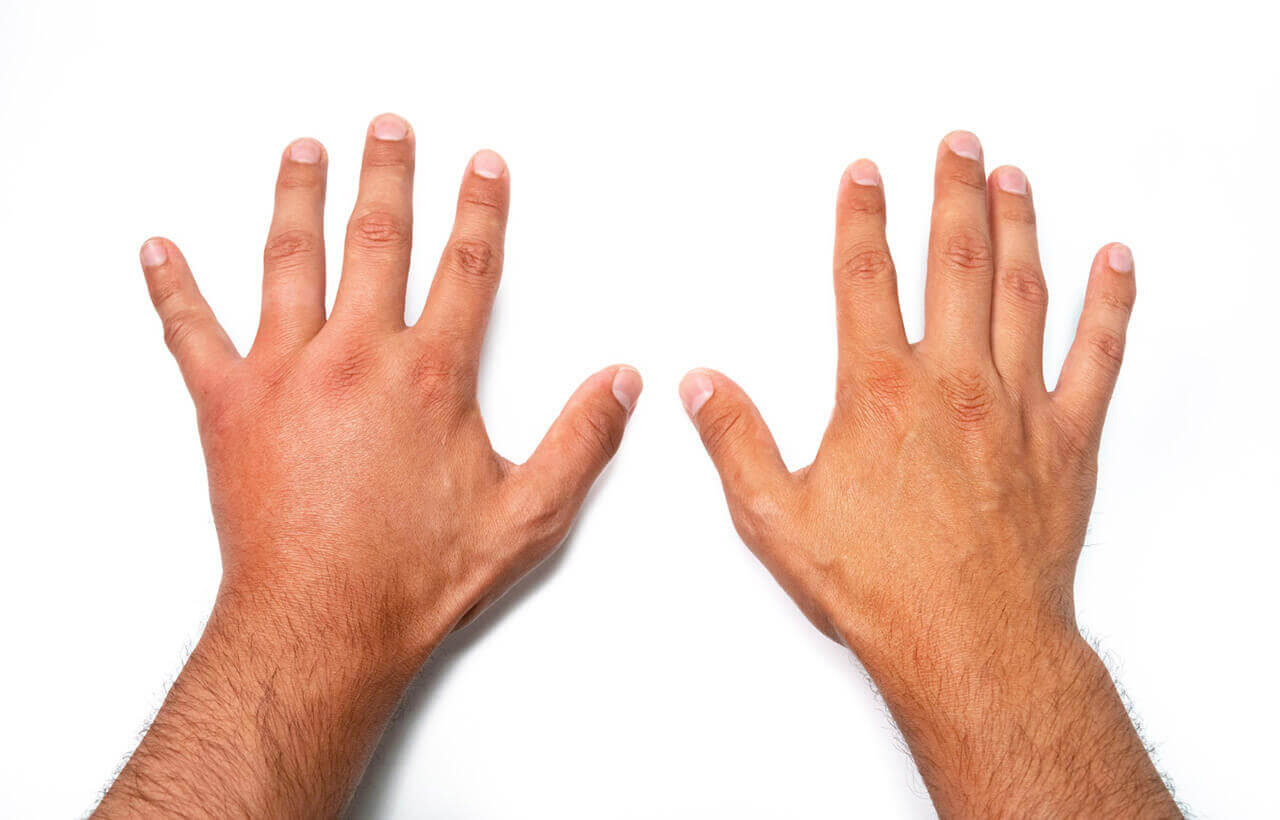
For individuals allergic to bee venom, a simple sting from these insects can be more dangerous than imagined! At this point, even after disinfecting the painful wound, progressive swelling may still be noticed in some areas of the body, such as hands, eyes, etc. Sometimes, the victim may even start to have difficulty breathing and become nauseous. Other solutions will then be needed in addition to pain relief.
In these types of situations, nothing replaces medical intervention. An immediate adrenaline injection will be necessary. Call emergency services, your pharmacist, or go to the nearest medical center.
What is Anaphylactic Reaction?
Discussing anaphylactic reaction seems necessary when addressing various allergic reactions to bee stings. It is a very severe inflammatory reaction to the venom of these stinging insects. This type of discomfort should never be neglected, as even a small shock can be life-threatening for the patient.
This anaphylactic reaction is a severe allergic reaction that affects only 1% of the world's population so far. Rare, it can cause very significant envenomation that is often difficult to combat. It is a condition triggered by multiple bee stings in a very short period.
Anaphylactic reaction is recognized by the following symptoms:
- The person who has just been stung will experience itching. Then redness and swelling will appear all over their body.
- They will then experience digestive problems such as diarrhea and vomiting.
- They may then have breathing difficulties.
- Finally, the patient may suffer from cardiac issues leading to anaphylactic shock.
Avoiding Bee Stings is Possible!
It is entirely possible to avoid bee stings by adopting a few good practices and habits:
- Do not get too close to a beehive or a wasp nest
- Avoid walking barefoot in fields
- Avoid wearing substances that might attract various species of bees, wasps, and bumblebees. This includes perfumes, for example.
- Do not wander too close to an open trash can
- Do not flail around when a stinging insect is near you. You can simply gently push it away, or calmly move to another spot so as not to frighten the little bee.
- Avoid leaving your open cans outdoors. Cover them if you wish to drink from them again. Insects can get inside while you are distracted.
Important!
Some people believe that by wearing thick clothing like jeans and a sweater, they are perfectly safe from bee stings. However, this is not the case! Bee stingers can easily penetrate clothing up to 10 millimeters thick. So, always be careful!